Alabama Septic System Installation: Costs, Permits & Step-by-Step Guide (2026)
Installing a Septic System in Alabama
Whether you're building a new home or replacing a failed system, installing a septic system in Alabama requires understanding the state's regulations, costs, and the unique challenges presented by Alabama's soil and climate. This guide walks you through the entire process from planning to completion.
When You Need a New System
There are several situations that may require a new septic installation in Alabama. Building a new home in an area without municipal sewer service is the most common reason. Replacing a system that has completely failed beyond repair, upgrading a system to meet current codes, or converting from a cesspool to a modern septic system are other common scenarios.
Alabama Installation Costs
The cost of a new septic system in Alabama varies based on system type, site conditions, and location within the state.
Conventional System: $4,000-$10,000 — The most affordable option for properties with suitable soil conditions. Includes a concrete or polyethylene tank and a gravity-fed drain field.
Chamber System: $5,000-$12,000 — Uses plastic chambers instead of gravel in the drain field. Often used in areas with moderate soil challenges.
Mound System: $8,000-$18,000 — Required when the natural soil doesn't provide adequate treatment depth. An engineered mound of suitable material is built above grade.
Aerobic Treatment Unit: $8,000-$16,000 — A mechanical system that provides a higher level of treatment. Often required for smaller lots or near sensitive water bodies.
Drip Irrigation System: $12,000-$22,000 — Distributes treated effluent through a network of drip lines. Used in challenging site conditions.
These costs include design, permitting, materials, labor, and inspection. They don't include the plumbing connection from your home to the system.
The Installation Process
Step 1: Contact Your County Health Department — Start by contacting the environmental health division of your county health department. They'll provide application forms and explain local requirements. Application fees typically range from $200-$500.
Step 2: Site Evaluation — A licensed evaluator performs soil testing on your property. This includes boring test holes to assess soil composition, depth to bedrock, and seasonal water table level. In Alabama's clay-heavy soils, this step is critical for determining what type of system your property can support. Cost: $300-$700.
Step 3: System Design — Based on the site evaluation, a system is designed for your specific conditions. For conventional systems, the county health department may provide the design. For alternative systems, you'll need a professional engineer, which adds $500-$2,000 to the project cost.
Step 4: Permit Approval — Submit the system design to your county health department for review and approval. This process typically takes 2-4 weeks but can be longer in busy counties.
Step 5: Choose a Licensed Installer — Alabama requires that septic systems be installed by contractors licensed through the county health department. Get quotes from at least three licensed installers and check their references.
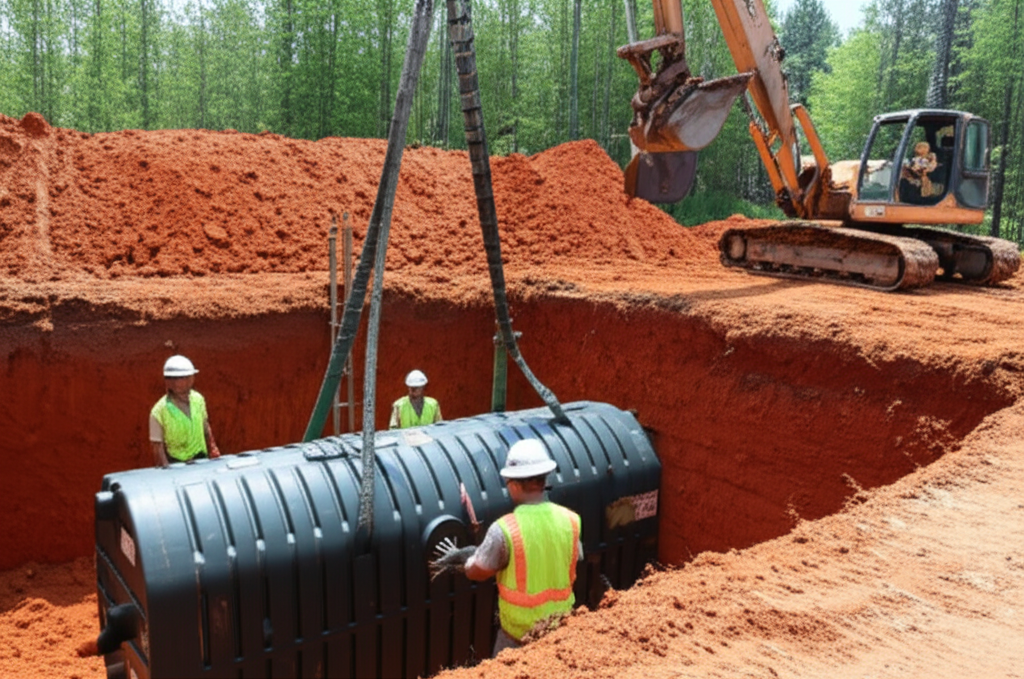
Step 6: Installation — A standard conventional installation takes 2-4 days. More complex systems may require a week or more. The installer handles all excavation, component placement, and connection work.
Step 7: Final Inspection — The county health department inspects the completed installation before it can be covered and put into service. Any deficiencies must be corrected before approval.
Alabama-Specific Considerations
Soil Challenges: Alabama's soil ranges from heavy clay in the central part of the state to sandy in the coastal areas. The red clay prevalent through much of the state is the most challenging for conventional systems. Be prepared for the possibility that your property may require an alternative system type.
Water Table: In southern Alabama, particularly near the Gulf Coast and in river valleys, high water tables can limit system options. Seasonal water table fluctuations are common and must be accounted for in system design.
Flood Zones: Properties in designated flood zones face additional requirements for system installation. Components may need to be elevated above the base flood elevation, and certain system types may not be permitted.
Hurricane Impact: If you're in southern Alabama, consider the potential impact of hurricanes and tropical storms on your system. Flooding from these events can damage or overwhelm septic systems.
After Installation
Once your system is installed and approved, maintain it properly to protect your investment. Establish a pumping schedule of every 3-5 years, avoid putting anything harmful down your drains, protect the drain field from vehicles and heavy equipment, and keep records of all maintenance.
For ongoing maintenance, find providers in Birmingham, Montgomery, Huntsville, Mobile, and across the state in our Alabama septic directory.
---
Find a Septic Professional Near You
Looking for a trusted septic service provider? Browse our directory of 1111 companies across 80 cities, with real customer reviews and pricing data. Use our Cost Calculator to see average prices in your area.