How to Maintain Your Septic Drain Field: 10 Essential Tips (2026)
Why Drain Field Maintenance Matters
Your drain field (also called a leach field or absorption field) is the final stage of wastewater treatment in your septic system. It's also the most expensive component to repair or replace, with costs ranging from $5,000 to $20,000 or more. Yet many homeowners give little thought to drain field maintenance until problems arise.
A well-maintained drain field can last 25 to 30 years or longer. A neglected one may fail in as few as 10 years. The good news is that drain field maintenance is mostly about developing good habits and avoiding common mistakes. This comprehensive guide covers everything you need to know.
How Your Drain Field Works
Understanding how your drain field works helps you maintain it properly:
- 1. Effluent exits the septic tank: After solids settle in the tank, liquid effluent flows out through the outlet pipe
- 2. Distribution: Effluent is distributed through perforated pipes in the drain field (either by gravity or pump)
- 3. Soil treatment: As effluent percolates through the soil, bacteria and other organisms remove harmful pathogens and nutrients
- 4. Absorption: Clean water eventually reaches the groundwater table
The soil beneath and around your drain field does the final treatment work. When the soil becomes clogged, saturated, or damaged, the system can no longer function properly.
Daily Habits That Protect Your Drain Field
Manage Water Usage
Every gallon of water that goes down your drains eventually reaches the drain field. Reducing water consumption directly reduces the workload on your drain field:
- Fix leaks immediately: A dripping faucet or running toilet wastes thousands of gallons and overloads your drain field
- Install efficient fixtures: Low-flow toilets (1.6 GPF or less), efficient showerheads, and front-loading washers significantly reduce water volume
- Spread water use: Don't run the dishwasher, washing machine, and showers simultaneously. Spread heavy water use throughout the day and week
- Take shorter showers: Even a few minutes less per shower adds up over time
Watch What Goes Down the Drain
Protecting your drain field starts at the sink and toilet:
- No grease or oils: These substances coat pipes and soil particles, reducing the drain field's ability to absorb water
- No harsh chemicals: Bleach, drain cleaners, and antibacterial products kill the bacteria that treat wastewater in both the tank and drain field soil
- Only flush toilet paper and waste: Everything else belongs in the trash
- Minimize garbage disposal use: Ground food waste increases solids in the tank, which can overflow into the drain field
Seasonal Maintenance Tasks
Spring
- Inspect the drain field area: After winter thaw, check for new wet spots, depressions, or erosion
- Check surface drainage: Ensure spring rains are draining away from the drain field, not toward it
- Assess vegetation: Note any new tree or shrub growth that could send roots toward the drain field
- Schedule annual inspection: Spring is an ideal time for professional inspection. Find septic inspectors in your area.
Summer
- Monitor during heavy use: Summer often brings guests and increased water usage. Be mindful of the extra load
- Maintain grass: Keep the grass over your drain field mowed but don't scalp it. Grass helps with evaporation and prevents erosion
- Water wisely: Don't irrigate the area over your drain field. It doesn't need extra water
- Watch for compaction: Summer activities (parking, playing) can compact soil over the drain field
Fall
- Clean gutters: Ensure downspouts direct water away from the drain field
- Remove fallen leaves: Heavy leaf accumulation can affect drainage and create wet conditions
- Prepare for winter: In cold climates, consider adding mulch over the drain field for insulation
- Schedule pumping if due: Fall is a good time to pump before winter makes access difficult
Winter
- Maintain insulation: In cold climates, snow cover actually insulates the drain field. Don't plow or remove snow from the drain field area
- Avoid compacting frozen ground: Stay off the drain field during freeze-thaw cycles
- Monitor for problems: Sewage surfacing in winter is a serious sign of failure
- Reduce water use: With holiday guests, be mindful of increased water consumption
Landscaping Around Your Drain Field
Proper landscaping protects your drain field while maintaining your yard's appearance:
Best choices:
- Native grasses and lawn grass (ideal ground cover)
- Shallow-rooted wildflowers
- Ground-covering perennials with shallow roots
Avoid:
- Trees of any kind within 30-50 feet (depending on species)
- Shrubs with deep or aggressive root systems
- Vegetable gardens (health risk from pathogens)
- Raised beds or heavy soil additions over the drain field
- Plastic sheeting or heavy mulch that prevents oxygen exchange
The drain field needs oxygen to function properly. Anything that prevents air from reaching the soil—including paving, heavy mulch layers, or compaction—reduces treatment effectiveness.
Protecting the Drain Field from Physical Damage
Physical damage is one of the most preventable causes of drain field failure:
- Never drive or park on the drain field: Vehicle weight compacts soil and can crush distribution pipes
- No structures: Don't build sheds, patios, decks, or playgrounds over the drain field
- No heavy equipment: Keep construction equipment, dumpsters, and storage containers away
- Fence if necessary: If your drain field is in an area prone to vehicle traffic, consider a barrier
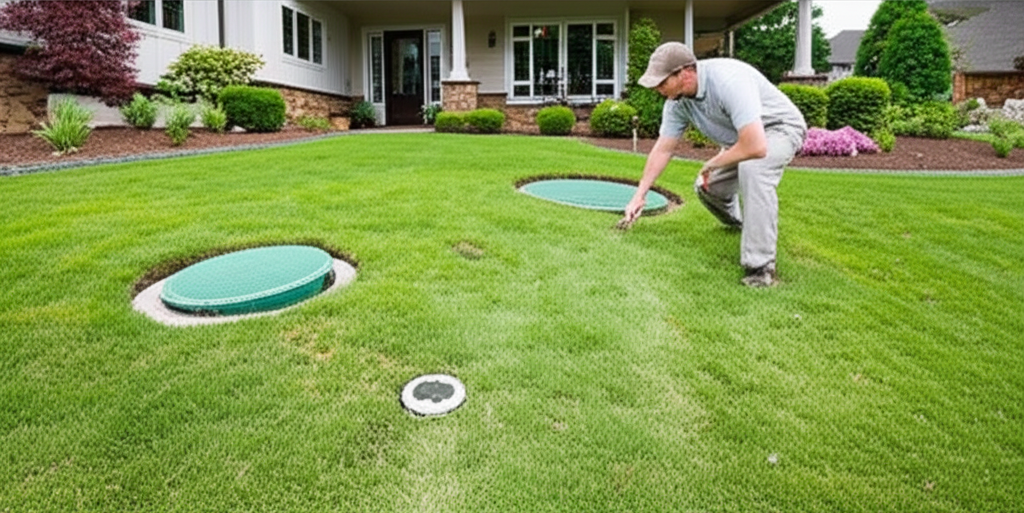
- Mark it clearly: Know and mark the boundaries of your drain field
Professional Maintenance
Some maintenance tasks require professional help:
Annual inspection ($100-$300): A professional checks the overall system performance, tank levels, and drain field condition. Regular inspections catch problems early. Browse local septic companies in Alabama or Missouri for inspection services.
Septic tank pumping (every 3-5 years, $300-$600): Regular pumping prevents solids from overflowing into and clogging the drain field. This is the single most important thing you can do to protect your drain field.
Camera inspection (as needed, $200-$500): If problems are suspected, a camera inspection of distribution pipes can reveal clogs, root intrusion, or pipe damage before they cause field failure.
Signs of Drain Field Problems
Act quickly if you notice:
- Soggy or saturated soil over the drain field
- Sewage odors in the yard
- Unusually green or fast-growing grass in one area
- Slow drains throughout the house
- Sewage surfacing on the ground
- Gurgling sounds from drains
Early intervention can sometimes save a failing drain field. Contact a septic professional immediately if you notice these signs. The sooner you act, the more options you'll have and the less you'll likely spend on solutions.