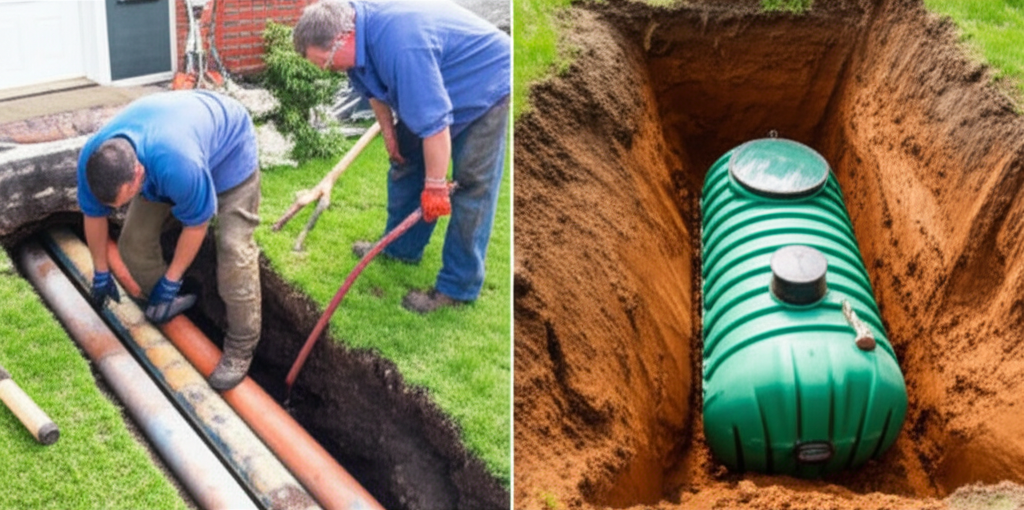
How to Choose Between Septic Repair vs Replacement
The Repair vs. Replacement Dilemma
When your septic system develops problems, one of the biggest decisions you'll face is whether to repair the existing system or invest in a complete replacement. This decision involves weighing costs, system age, extent of damage, and long-term value. Making the wrong choice can mean wasting money on repairs that don't last or replacing a system that could have been fixed affordably.
This guide helps you evaluate your options systematically so you can make the best decision for your property and budget.
When Repair Makes Sense
Repairs are typically the better choice when problems are isolated, the system is relatively young, and the core components (especially the drain field) are still functional.
Common Repairable Issues
Pump failure ($500-$1,500): Effluent pumps and sewage ejector pumps have a typical lifespan of 7-15 years. Replacing a pump is straightforward and cost-effective compared to system replacement.
Damaged baffles ($300-$900): Inlet and outlet baffles can crack, deteriorate, or break off over time. Baffle replacement is a common repair that extends tank life significantly.
Minor pipe damage ($500-$2,500): A cracked or root-damaged section of pipe can be repaired or replaced without affecting the rest of the system. Trenchless pipe lining is an option for longer runs.
Distribution box problems ($500-$1,500): A failed or tilted distribution box causes uneven flow to drain field lines. Replacing or releveling the D-box is a relatively simple repair.
Float switch or alarm issues ($150-$400): Electronic components fail and are easily replaced by a technician.
Tank lid or riser damage ($200-$600): Cracked lids or damaged risers can be replaced without affecting the tank itself.
Repair Cost Ranges
| Repair Type | Cost Range |
|---|---|
| Pump replacement | $500-$1,500 |
| Baffle repair | $300-$900 |
| Pipe repair (section) | $500-$2,500 |
| D-box replacement | $500-$1,500 |
| Tank lid replacement | $200-$600 |
| Root removal | $200-$800 |
| Minor drain field repair | $1,500-$5,000 |
When Replacement Is the Better Option
Sometimes replacement is more cost-effective than repair, even though the upfront cost is higher.
Signs You Need Full Replacement
System age exceeds 25-30 years: Older systems approach the end of their designed lifespan. Repairing individual components becomes a cycle of diminishing returns when the system itself is aging out.
Drain field has completely failed: When the drain field soil is saturated and no longer absorbs effluent, repair options are limited. Signs include persistent standing water, surfacing sewage, and failed percolation. A new drain field or alternative system is usually necessary.
Multiple simultaneous failures: When the tank, pipes, and drain field all show problems, repairing each component individually often costs more than replacement and doesn't address the underlying systemic issues.
Tank structural failure: Severely cracked concrete tanks, rusted-through steel tanks, or tanks with compromised structural integrity generally cannot be reliably repaired.
Regulatory non-compliance: If your system doesn't meet current health and environmental codes, you may be required to install a compliant system regardless of repair feasibility. This commonly occurs when selling a property.
Property changes: If you've added bedrooms, a home addition, or significantly increased water usage, your existing system may be undersized. Replacement with a properly sized system is the only viable option.
Replacement Cost Ranges
| System Type | Cost Range |
|---|---|
| Conventional gravity system | $10,000-$20,000 |
| Pressure distribution system | $12,000-$25,000 |
| Mound system | $15,000-$25,000 |
| Sand filter system | $15,000-$25,000 |
| Aerobic treatment unit | $15,000-$30,000 |
| Drip irrigation system | $15,000-$30,000 |
Decision Framework
Use this framework to evaluate your situation:
Step 1: Get a Professional Assessment
Before making any decision, hire a licensed septic professional to thoroughly evaluate your system. A comprehensive inspection ($300-$600) reveals the condition of all components and identifies which are failing. Find qualified inspectors in your area.
Step 2: Calculate the 50% Rule
A common guideline: if repair costs exceed 50% of replacement costs, replacement is usually the better investment. For example, if a new system costs $15,000, repairs exceeding $7,500 may not be worthwhile, especially on an older system.
Step 3: Consider Remaining Lifespan
Factor in how many years of service you can expect after repairs:
- Repairs to a 5-year-old system: Likely 20+ years of remaining life. Repair makes sense.
- Repairs to a 20-year-old system: May only get 5-10 more years. Consider replacement.
- Repairs to a 30-year-old system: Diminishing returns. Replacement likely more economical.
Step 4: Evaluate Property Plans
Your long-term plans for the property matter:
- Selling soon: A new system adds value and eliminates buyer concerns. Many buyers are wary of older septic systems. A new system can be a selling point.
- Staying long-term: A replacement gives you decades of worry-free service. Worth the investment.
- Renovating or expanding: If you're adding square footage or bedrooms, replacement with a properly sized system is essential.
Step 5: Check Financing Options
Don't let upfront costs alone drive your decision:
- Many septic companies offer payment plans or financing
- Some states and counties have low-interest loan programs for septic improvements
- USDA Rural Development offers grants and loans for septic systems in eligible areas
- FHA 203(k) loans can include septic replacement in home renovation financing
Getting Quotes
When evaluating options, get at least three quotes from licensed contractors. For each quote, ask:
- 1. What exactly will be repaired or replaced?
- 2. What is the expected lifespan of the repair/new system?
- 3. What warranty is included?
- 4. Are permits and inspections included in the price?
- 5. What is the timeline for completion?
Compare quotes carefully—the cheapest option isn't always the best value. Look for experienced contractors with good reviews. Browse providers in California, Georgia, or North Carolina to start your search.
The Bottom Line
There's no one-size-fits-all answer to the repair vs. replacement question. The right choice depends on your system's age, the extent of damage, your budget, and your long-term plans. A thorough professional assessment combined with the decision framework above helps you invest wisely in your property's wastewater system. Find trusted septic professionals to help you evaluate your options today.