Septic System Failure: Causes, Signs, and Solutions
Understanding Septic System Failure
A septic system failure occurs when the system can no longer effectively treat and dispose of household wastewater. This can range from minor issues like a clogged pipe to catastrophic failures requiring complete system replacement. Understanding the causes and early warning signs can save homeowners thousands of dollars and prevent environmental contamination.
Approximately 10-20% of septic systems experience significant malfunctions each year, according to EPA estimates. Many of these failures are preventable with proper maintenance and early intervention. Whether you're dealing with a current problem or want to prevent future issues, this guide covers everything you need to know.
Top Causes of Septic System Failure
1. Lack of Regular Maintenance
The number one cause of septic failure is neglecting routine maintenance. When tanks aren't pumped on schedule, solid waste accumulates and eventually flows into the drain field, clogging the soil and causing system failure.
The fix: Pump your tank every 3-5 years and have annual inspections. Find septic pumping services in your area to get on a regular schedule.
2. Hydraulic Overloading
When too much water enters the system too quickly, it overwhelms the tank's ability to separate solids from liquids and floods the drain field. Common causes include:
- Running multiple water-intensive appliances simultaneously
- Leaky faucets and running toilets
- Routing roof drains or sump pumps into the septic system
- Large gatherings that exceed normal usage patterns
- Doing all laundry in a single day
The fix: Spread water use throughout the day and week. Fix leaks promptly. Never connect stormwater drainage to your septic system.
3. Drain Field Damage
The drain field is the most vulnerable and expensive component of your septic system. Common causes of drain field damage include:
- Driving or parking vehicles over the drain field
- Building structures (patios, sheds) on the drain field
- Planting trees or deep-rooted plants too close
- Soil compaction from heavy equipment
- High water tables or flooding
The fix: Protect your drain field from physical damage and ensure proper grading directs surface water away from the area.
4. Flushing Inappropriate Materials
Your septic system is designed to process human waste and toilet paper only. Flushing other materials causes clogs and disrupts the bacterial balance needed for waste treatment:
- Never flush: Wipes (even "flushable" ones), feminine products, condoms, dental floss, cat litter, medications, cooking grease, coffee grounds, paint, or chemicals
- Limit: Antibacterial soaps and heavy chemical cleaners that kill beneficial bacteria
5. Chemical Damage
Household chemicals poured down drains kill the beneficial bacteria that break down waste in your septic tank:
- Bleach in large quantities
- Drain cleaners
- Paint and solvents
- Pesticides and herbicides
- Excessive use of antibacterial products
The fix: Use septic-safe cleaning products and never pour chemicals down your drains.
6. System Age
Even well-maintained septic systems have a finite lifespan. Conventional systems typically last 25-30 years, while some components may fail sooner:
- Steel tanks: 15-20 years before rusting through
- Concrete tanks: 40+ years with proper maintenance
- Drain fields: 20-30 years under normal conditions
- Pumps and mechanical components: 7-15 years
Early Warning Signs of Failure
Catching problems early dramatically reduces repair costs. Watch for:
Inside the home:
- Slow drains in multiple fixtures
- Gurgling sounds from drains or toilets
- Sewage odors inside the house
- Sewage backing up into lowest drains
- Toilets that won't flush properly
Outside the home:
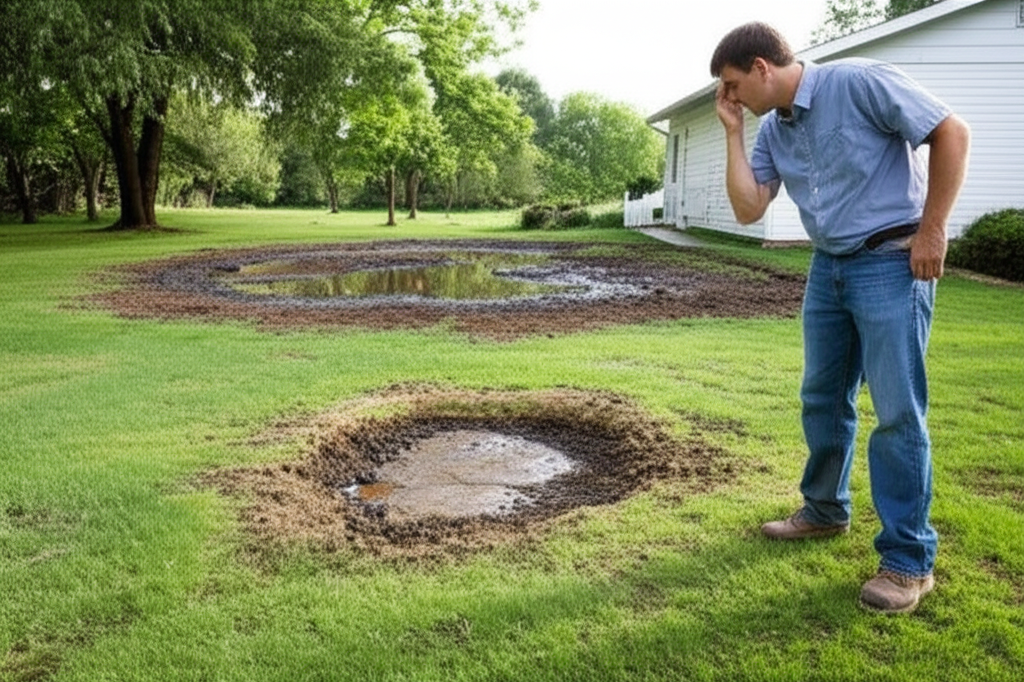
- Standing water or muddy soil near the tank or drain field
- Unusually green or lush grass over the drain field
- Sewage odors in the yard
- Surfacing sewage or dark liquid
- Algae blooms in nearby ponds or streams
System indicators:
- High water level in the tank (visible during pumping)
- Alarm sounding on systems with alarms
- Pump running constantly or not at all
- Tank needs pumping more frequently than normal
Solutions for Different Types of Failure
Minor Problems ($200-$2,000)
- Clogged inlet/outlet pipe: Cleared with a snake or hydro jetting
- Damaged baffle: Replaced without disturbing the tank
- Failed pump or float: Component replacement
- Minor root intrusion: Mechanical cutting and chemical treatment
Moderate Problems ($2,000-$8,000)
- Partial drain field failure: Repair or extend the affected section
- Tank crack repair: Possible with some concrete tanks
- Distribution box replacement: New D-box and regrading
- Pipe replacement: New piping between components
Major Problems ($8,000-$30,000+)
- Complete drain field replacement: New drain field installation
- Tank replacement: New tank with associated piping
- Full system replacement: Entire new septic system
- Alternative system installation: Mound, sand filter, or aerobic system
When to Repair vs. Replace
Consider replacement when:
- The system is over 25 years old with multiple failing components
- Drain field has completely failed
- Repair costs exceed 50% of replacement cost
- Local regulations require upgraded systems
- Property use has changed (additions, more bedrooms)
Consider repair when:
- Only one component has failed
- The system is relatively new (under 15 years)
- The drain field is still functional
- Problems are caught early
Get professional assessments from licensed septic contractors. Search for providers in Texas, Florida, or South Carolina to compare repair versus replacement options for your situation.
Preventing System Failure
The most cost-effective approach is prevention:
- 1. Regular pumping: Every 3-5 years based on household size
- 2. Annual inspections: Catch problems before they become failures
- 3. Water conservation: Reduce the load on your system
- 4. Proper waste disposal: Only flush appropriate materials
- 5. Protect the drain field: No vehicles, structures, or deep-rooted plants
- 6. Keep records: Document all maintenance, pumping, and repairs
- 7. Know your system: Understand its type, size, age, and location
Investing in regular maintenance costs a few hundred dollars per year but can prevent failures costing tens of thousands. Browse septic maintenance providers near you to protect your system today.