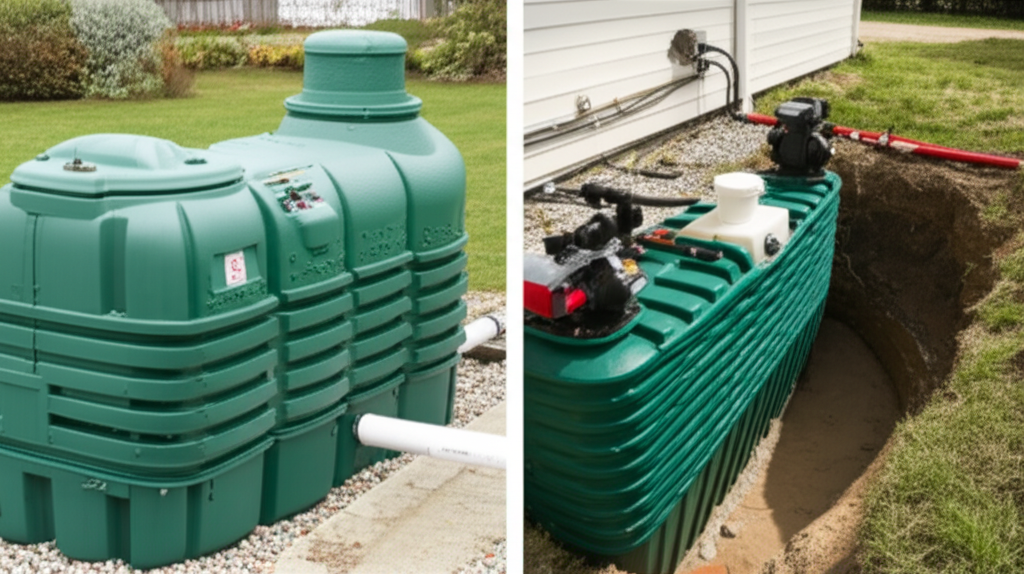
Aerobic vs Anaerobic Septic Systems: Which is Better?
Understanding the Two Main Types of Septic Systems
When installing or replacing a septic system, one of the fundamental choices you'll face is between an aerobic and anaerobic system. These two approaches to wastewater treatment differ significantly in how they process waste, what they cost, and how much maintenance they require. Understanding these differences helps you choose the right system for your property, budget, and local conditions.
The terms refer to how bacteria break down waste: anaerobic bacteria work without oxygen, while aerobic bacteria require oxygen to function. This simple distinction has major implications for system design, cost, and performance.
How Anaerobic Systems Work
Anaerobic septic systems are the traditional, most common type installed in the United States. They rely on naturally occurring bacteria that thrive in oxygen-free environments.
The process:
- 1. Wastewater flows from the house into a sealed septic tank
- 2. Solids settle to the bottom (sludge) and oils float to the top (scum)
- 3. Anaerobic bacteria slowly break down organic matter in the tank
- 4. Partially treated liquid (effluent) flows to the drain field
- 5. Soil bacteria complete the treatment process as effluent percolates through the ground
Key characteristics:
- Simple design with few or no mechanical parts
- Relies on gravity for most operations
- Treatment is slower and less complete in the tank
- The drain field does significant treatment work
- No electricity required for basic systems
How Aerobic Systems Work
Aerobic treatment units (ATUs) actively introduce oxygen into the treatment process, dramatically increasing bacterial activity and treatment efficiency.
The process:
- 1. Wastewater enters a pre-treatment or trash tank
- 2. In the aeration chamber, air is pumped in to support aerobic bacteria
- 3. Aerobic bacteria aggressively break down organic matter (much faster than anaerobic)
- 4. Treated water moves to a settling chamber where remaining solids settle out
- 5. Highly treated effluent is discharged (often through spray heads, drip irrigation, or a small drain field)
Key characteristics:
- Mechanical components (air pump/compressor, sometimes UV disinfection)
- Requires electricity to operate
- Produces much cleaner effluent (up to 98% treatment)
- Smaller drain field or alternative discharge methods possible
- More complex system requiring regular professional maintenance
Cost Comparison
Installation Costs
| Cost Factor | Anaerobic | Aerobic |
|---|---|---|
| System purchase | $3,000-$8,000 | $10,000-$20,000 |
| Installation | $5,000-$15,000 | $10,000-$25,000 |
| Total installed | $8,000-$20,000 | $15,000-$30,000 |
| Drain field | Full-size required | Smaller or none |
Aerobic systems cost significantly more upfront, but the reduced drain field requirements can partially offset the difference, especially on properties where conventional drain fields are difficult or impossible to install.
Ongoing Maintenance Costs
| Maintenance | Anaerobic | Aerobic |
|---|---|---|
| Pumping (every 3-5 years) | $300-$600 | $300-$600 |
| Annual inspection | $100-$300 | $200-$500 |
| Electricity | $0 | $50-$150/year |
| Maintenance contract | Not typical | $200-$500/year |
| Component replacement | Rare | $200-$800 every few years |
| Annual total | $100-$300 | $400-$1,000 |
Over a 20-year period, an aerobic system typically costs $5,000-$15,000 more in maintenance than an anaerobic system.
Performance Comparison
Treatment Quality
Aerobic systems produce significantly cleaner effluent:
- Anaerobic effluent: Reduces Biochemical Oxygen Demand (BOD) by about 40-60%. Still contains significant pathogens and nutrients. Requires extensive soil treatment.
- Aerobic effluent: Reduces BOD by 85-98%. Much lower pathogen levels. Some systems include UV disinfection for near-complete pathogen removal.
Environmental Impact
The superior treatment quality of aerobic systems makes them the better choice in environmentally sensitive areas:
- Near waterways, lakes, or coastal areas
- In areas with high water tables
- Where soil conditions are poor for filtration
- In watershed protection zones
Reliability
Anaerobic advantages:
- No mechanical parts to fail (in basic systems)
- Works during power outages
- More forgiving of irregular maintenance
- Simpler to understand and operate
Aerobic advantages:
- Better treatment of difficult waste streams
- Smaller footprint for the drain field
- Can work in poor soil conditions
- Cleaner discharge protects the environment
When to Choose Anaerobic
An anaerobic system is typically the better choice when:
- Soil conditions are good: Sandy or loamy soil with adequate percolation rates
- Property has adequate space: Room for a full-size drain field with required setbacks
- Budget is limited: Lower installation and maintenance costs
- Simplicity is preferred: Fewer components means less that can go wrong
- Power reliability is a concern: No electricity needed for basic operation
Most rural properties with suitable soil and space are well-served by conventional anaerobic systems. Find septic installers in Virginia or Wisconsin to evaluate your property.
When to Choose Aerobic
An aerobic system may be necessary or preferable when:
- Poor soil conditions: Clay, rocky soil, or shallow bedrock limits drain field effectiveness
- Limited space: Small lots can't accommodate a conventional drain field
- High water table: Groundwater too close to the surface for conventional systems
- Environmental sensitivity: Property near waterways, wells, or protected areas
- Regulatory requirements: Some jurisdictions mandate aerobic systems in certain areas
- Lot size restrictions: Smaller lots may require the compact footprint of an aerobic system
Browse aerobic system specialists in Texas (where aerobic systems are very common) or Louisiana for expert installation.
Hybrid and Alternative Options
Some systems combine elements of both approaches:
Aerobic pre-treatment with conventional drain field: An ATU treats wastewater before it reaches a smaller conventional drain field. This hybrid approach provides better treatment while keeping drain field costs lower.
Recirculating sand filter: Wastewater passes through a sand bed where both aerobic and anaerobic processes occur. Good treatment quality with moderate complexity.
Constructed wetlands: Natural treatment systems that use both aerobic and anaerobic zones. Lower maintenance but require more space.
Making Your Decision
Consider these factors when choosing:
- 1. Have your soil tested: Percolation tests determine if conventional systems will work
- 2. Check local regulations: Some areas restrict system types
- 3. Evaluate your property: Size, slope, water table, and proximity to water features
- 4. Consider long-term costs: Include 20+ years of maintenance in your calculations
- 5. Get professional advice: A licensed septic designer can recommend the best system for your specific situation
Find qualified septic professionals in North Carolina or Michigan to assess your property and recommend the right system type. The best choice depends on your unique combination of soil, space, budget, and environmental factors.
---
Find a Septic Professional Near You
Looking for a trusted septic service provider? Browse our directory of 1111 companies across 80 cities, with real customer reviews and pricing data. Use our Cost Calculator to see average prices in your area.