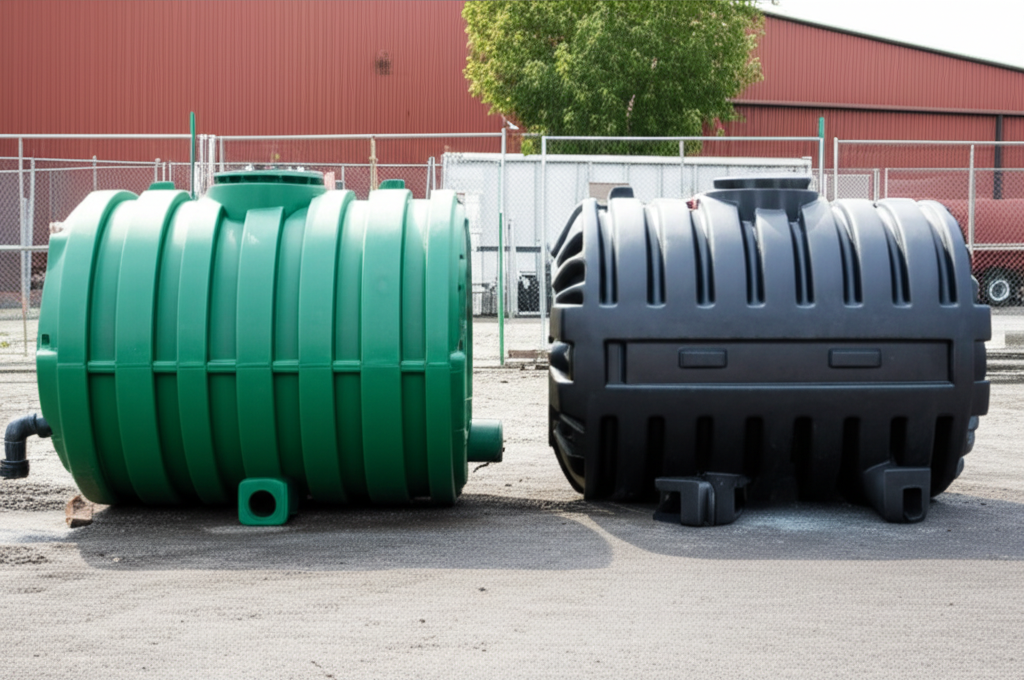
Concrete vs Plastic Septic Tanks: Cost, Lifespan & Which Is Better (2026)
Concrete vs Plastic Septic Tanks: Which Is Right for You?
When installing a new septic system, one of the most important decisions you'll make is choosing the right tank material. Concrete and plastic (polyethylene) are the two most popular options, each with distinct advantages and drawbacks. This comprehensive comparison will help you make an informed decision based on your property, budget, and long-term needs.
Concrete Septic Tanks
How They're Made
Concrete septic tanks are pre-cast at a manufacturing facility and delivered to your property by truck. They're made from reinforced concrete with steel rebar for structural strength. Standard sizes range from 1,000 to 2,000 gallons.
Pros of Concrete Tanks
Durability and Longevity
Concrete tanks are incredibly durable and can last 40 years or more with proper maintenance. They resist damage from soil pressure and aren't affected by changing soil conditions.
Weight and Stability
Their heavy weight (several thousand pounds) means they won't shift or float, even in areas with high water tables. This is a significant advantage in flood-prone regions. Find septic services in Florida where high water tables are common.
Widely Accepted
Concrete tanks are approved in virtually every jurisdiction. Some areas actually require concrete tanks due to their proven track record and reliability.
Large Capacity Options
Concrete tanks are available in very large sizes, making them suitable for commercial properties and large households.
Cons of Concrete Tanks
Cost
Concrete tanks are generally more expensive than plastic, both in materials and installation. The heavy weight requires specialized equipment (a crane) for delivery and placement, adding to labor costs.
Cracking Potential
Over time, concrete can develop cracks due to soil movement, tree root pressure, or settlement. Cracks can allow groundwater infiltration or sewage leakage.
Corrosion
The hydrogen sulfide gases produced inside the tank can gradually corrode concrete from the inside, weakening the structure over decades. Modern tanks often include protective coatings to mitigate this.
Difficult to Repair
When concrete tanks do crack or deteriorate, repairs can be challenging and expensive. In some cases, replacement is the only option.
Plastic (Polyethylene) Septic Tanks
How They're Made
Plastic septic tanks are manufactured from high-density polyethylene (HDPE) through rotational molding. They're lightweight, one-piece units that come in various sizes.
Pros of Plastic Tanks
Lightweight and Easy to Install
Plastic tanks weigh a fraction of concrete tanks, making them much easier and cheaper to transport and install. No crane is needed — a few workers can position the tank manually in many cases.
Corrosion Resistant
Plastic doesn't corrode, rust, or deteriorate from the gases inside the tank. This gives plastic tanks excellent longevity in terms of material integrity.
Watertight
Because they're molded as a single piece, plastic tanks have no joints or seams that can leak. This makes them inherently watertight from day one.
Lower Cost
Plastic tanks typically cost 20% to 40% less than comparable concrete tanks, including installation. Browse Texas septic companies for competitive pricing on both options.
Crack Resistant
The flexible nature of plastic means these tanks can absorb ground movement without cracking, making them suitable for areas with shifting soils.
Cons of Plastic Tanks
Buoyancy Risk
The lightweight nature of plastic tanks makes them susceptible to floating or shifting in areas with high water tables or during flooding. Proper anchoring is essential.
Structural Vulnerability
Plastic tanks can be damaged by heavy soil pressure, especially if the backfill isn't done properly. They may also be crushed if vehicles drive over them.
Not Universally Accepted
Some jurisdictions don't allow plastic tanks, or they require additional engineering for installation. Check local regulations before choosing this option. Find septic services in Georgia or North Carolina for guidance on local codes.
Limited Large Sizes
Very large plastic tanks may not be available, making them less suitable for commercial applications or very large households.
Environmental Concerns
While durable, plastic tanks are not as easily recycled as concrete at the end of their life.
Cost Comparison
| Factor | Concrete | Plastic |
|--------|----------|---------|
| Tank (1,000 gal) | $800 – $2,000 | $500 – $1,500 |
| Delivery | $200 – $500 | $100 – $250 |
| Installation labor | $1,500 – $3,000 | $1,000 – $2,000 |
| Equipment (crane) | $500 – $1,000 | Not needed |
| Total | $3,000 – $6,500 | $1,600 – $3,750 |
Which Should You Choose?
Choose Concrete If:
- You live in an area with a high water table or flood risk
- Your local codes require concrete
- You want maximum durability and longevity
- You need a very large tank (over 1,500 gallons)
- Heavy vehicles may occasionally pass over the tank area
Choose Plastic If:
- You're on a tighter budget
- Your property has difficult access for heavy equipment
- You live in an area with stable, well-drained soil
- Local codes permit plastic tanks
- You want faster, easier installation
Other Tank Materials
While concrete and plastic are the most common, other options exist:
- Fiberglass: Similar to plastic but stronger; costs more; doesn't float as easily
- Steel: Rarely used for new installations due to corrosion issues; still found in older systems
Making Your Decision
The best tank material depends on your specific situation. Consider your soil conditions, water table level, local regulations, budget, and long-term plans. Browse Pennsylvania septic companies or find septic services in Ohio to consult with local professionals who understand your area's conditions.
The Bottom Line
Both concrete and plastic septic tanks are reliable options when properly installed and maintained. Concrete offers superior weight and durability, while plastic provides cost savings and easier installation. Consult with local septic professionals to determine which material is best suited for your property's unique conditions.
---
Find a Septic Professional Near You
Looking for a trusted septic service provider? Browse our directory of 1111 companies across 80 cities, with real customer reviews and pricing data. Use our Cost Calculator to see average prices in your area.