Drain Field Replacement Cost: What to Expect
What Is a Drain Field and Why Does It Need Replacing?
The drain field (also called a leach field) is a critical component of your septic system. It's the underground area where wastewater from your septic tank is distributed into the soil for final treatment. Over time, drain fields can fail due to soil saturation, biomat buildup, compaction, or age. When your drain field fails, replacement becomes necessary to protect your property and the environment.
Replacing a drain field is one of the most significant expenses a septic system owner can face. Understanding the costs involved helps you plan financially and make informed decisions about your options. If you're noticing signs of drain field failure, it's important to act quickly before the problem worsens.
📊 Real Data from Find A Septic
- Based on 5,345 customer reviews across 80 cities
- Prices reported by customers: $15 – $27,500 (avg $1,402)
- 600 companies offer emergency/same-day service
Average Drain Field Replacement Costs
The typical cost to replace a drain field ranges from $3,000 to $15,000, with most homeowners spending between $5,000 and $10,000. However, costs can exceed $20,000 in complex situations involving difficult terrain, poor soil conditions, or larger systems.
Here's a breakdown of what influences the total cost:
- System size: Larger homes with more bedrooms require bigger drain fields
- Soil conditions: Rocky or clay-heavy soil increases excavation costs
- Permits and inspections: Local health department fees vary by county
- Accessibility: Hard-to-reach locations require specialized equipment
- Type of system: Conventional gravity systems cost less than engineered alternatives
Cost Breakdown by Component
Understanding each component helps you evaluate quotes from contractors:
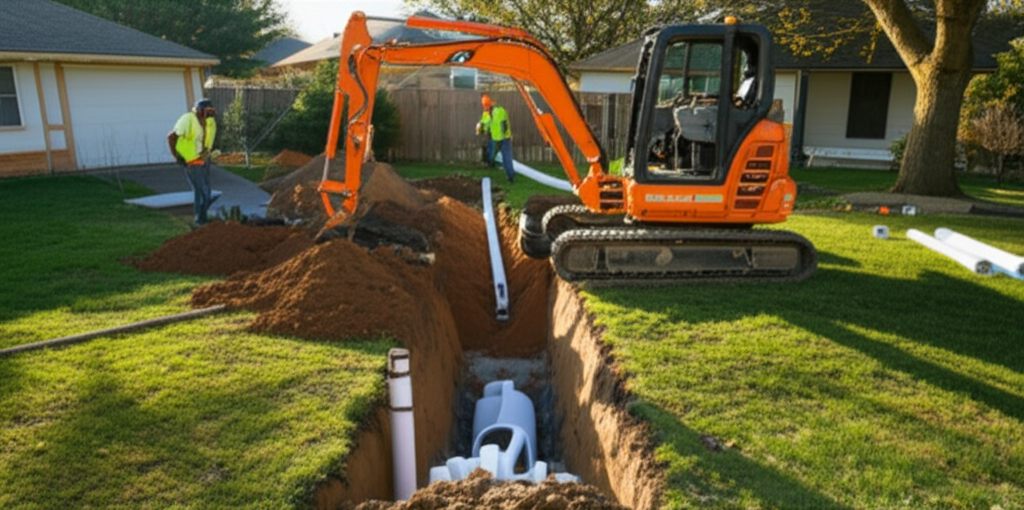
Excavation and removal of the old drain field typically costs $1,500 to $4,000. This includes removing the existing pipes, gravel, and contaminated soil. The excavation crew must carefully work around existing utilities and landscaping.
Soil testing and percolation tests run $500 to $1,500. These tests determine how well your soil absorbs water and help engineers design the new system. Some counties require multiple test holes at different locations on your property.
New drain field materials including distribution pipes, gravel, and distribution boxes cost $1,000 to $3,000. The type of distribution system chosen affects material costs significantly.
Labor and installation ranges from $2,000 to $6,000 depending on complexity. A standard gravity-fed system takes 2-3 days to install, while engineered systems may take longer.
Permits and engineering fees add $500 to $2,500. Most jurisdictions require permits for drain field replacement, and some require engineered designs by a licensed professional.
Factors That Increase Costs
Several factors can push your drain field replacement cost toward the higher end:
Alternative systems: If your soil doesn't support a conventional drain field, you may need a mound system ($10,000-$20,000), sand filter system ($7,000-$18,000), or drip irrigation system ($8,000-$15,000). These engineered alternatives are more expensive but work in challenging conditions.
Property constraints: Limited space may require a more compact but expensive system design. Properties with high water tables, steep slopes, or shallow bedrock face additional engineering challenges.
Environmental regulations: Some areas near waterways or wetlands have stricter requirements that increase costs. You may need additional treatment components or larger setback distances.
Emergency replacement: If your drain field has completely failed and you need immediate replacement, expect to pay a premium for expedited service. Find septic services in Florida or browse Atlanta septic companies for competitive quotes.
How to Save Money on Drain Field Replacement
While drain field replacement is expensive, there are ways to manage costs:
- 1. Get multiple quotes: Always get at least three estimates from licensed contractors. Prices can vary significantly between companies. Browse local providers in Texas or Ohio to compare options.
- 2. Plan ahead: If your drain field is showing early signs of failure, scheduling replacement during the off-season (late fall or winter) may save 10-20%.
- 3. Consider repair first: Sometimes drain field issues can be resolved with less expensive repairs like jetting, fracturing, or adding beneficial bacteria. Ask your contractor about these options before committing to full replacement.
- 4. Check financing options: Many septic companies offer payment plans, and some counties have low-interest loan programs for septic system repairs.
- 5. Maintain your new system: Once installed, proper maintenance extends the life of your drain field. Regular septic tank pumping prevents solids from reaching and clogging the new drain field.
Signs Your Drain Field Needs Replacement
Watch for these warning signs that indicate drain field problems:
- Standing water or soggy ground over the drain field area
- Sewage odors in the yard, especially near the drain field
- Slow drains throughout the house
- Bright green, lush grass over the drain field (indicating surfacing effluent)
- Sewage backing up into the home
- Failed septic inspection results
The Replacement Process
A typical drain field replacement follows these steps:
- 1. Assessment: A licensed septic professional evaluates the failed system
- 2. Soil testing: Percolation tests determine the best replacement option
- 3. Design: An engineer or installer designs the new system
- 4. Permitting: Required permits are obtained from local health departments
- 5. Excavation: The old drain field is removed
- 6. Installation: New distribution pipes and gravel bed are installed
- 7. Inspection: The health department inspects the new system
- 8. Backfill and restoration: The area is filled and graded
Planning for the Future
A well-designed and properly maintained drain field should last 20 to 30 years. To maximize the lifespan of your new drain field, pump your septic tank regularly, conserve water, avoid driving or parking on the drain field, and keep trees and shrubs at a safe distance. Find qualified septic professionals near you to help maintain your system for years to come.